
Articles
Explainer articles on IQ and cognitive ability.
Intellectual Disability and IQ: Mild, Moderate, Severe Ranges
An IQ of about 70 or below is the guide for intellectual disability, but IQ alone does not decide it. IQ ranges by severity, DSM-5 and ICD-11, and prevalence.
2026-10-05

Low Working Memory: Signs in Adults and Children, and What Helps
Signs of low working memory in children and adults, the four-chunk limit, links to IQ and ADHD, why training rarely transfers, and what actually helps.
2026-10-05
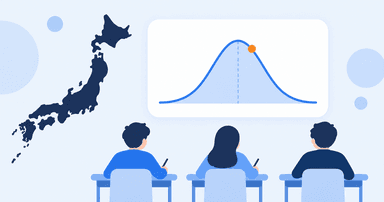
What Is the Average IQ in Japan? The 106 Claim, Examined
Japan's average IQ is 100 by definition on Japanese-normed tests. Where the 106.48 figure comes from, its limits, and what PISA 2025 and PIAAC show.
2026-10-05
ADHD and IQ: Is Average IQ Lower? WISC Profiles and High-IQ ADHD
ADHD and IQ, by the research: the average IQ gap (d=0.61), why WISC working memory and processing speed dip, high-IQ ADHD, diagnosis, and medication.
2026-09-28

Autism and IQ: Intellectual Disability Rates and Test Profiles
How autism relates to IQ: CDC data on intellectual disability rates, the uneven WISC profile, higher Raven's scores, savant skills, and Asperger's.
2026-09-28

Does Reading Raise IQ? What Twin Studies and Meta-Analyses Show
Does reading raise IQ? A twin study of 1,890 pairs, a 99-study meta-analysis, education and IQ, aging, fiction-empathy replication, and paper vs. screens.
2026-09-28

20-Point IQ Gap: Does It Really Make Conversation Impossible?
Does a 20-point IQ gap make conversation impossible? Hollingworth's 30-point claim, the 1.2 SD (about 18 points) leader study, couples' IQs, and common ground.
2026-09-28
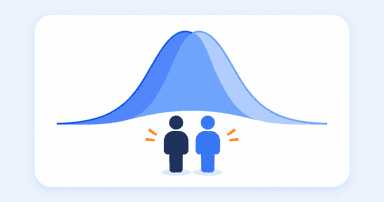
IQ Gender Differences: Same Average, Different Spread and Skills
Are there gender differences in IQ? Equal averages, wider spread in boys, mental rotation (d=0.56), a near-zero math gap (d=0.0065), and Japan's PISA 2022.
2026-09-28
IQ and Longevity: 15 Points Higher, 24% Lower Risk of Death?
IQ and longevity: a childhood IQ 15 points higher was tied to 24% lower mortality (1.1 million people). Causes of death, education, genes, and what you can do.
2026-09-28

What Is Jiatama? Japan's "Natural Smarts" vs IQ and Education
Jiatama is Japanese for natural smarts: thinking ability you weren't taught. How it relates to fluid intelligence, IQ, grades, job performance, and training.
2026-09-25
Tanaka-Binet Intelligence Scale: IQ Scoring, V vs. VI, and WISC
The Tanaka-Binet is Japan's individual IQ test for ages 2 to adult. How mental age, ratio IQ, and DIQ work, V vs. VI (2024), ryoiku techo, WISC, and cost.
2026-09-25

How to Read WISC-V Results: FSIQ, Index Scores and Discrepancies
A parent's guide to reading a WISC-V or WISC-IV report: FSIQ, index scores, confidence intervals, percentiles, unusual index gaps, retesting, and school use.
2026-09-25

What Is Borderline Intellectual Functioning? IQ 70–84 and 1 in 7
Borderline intellectual functioning is the name for an IQ of roughly 70–84, not a diagnosis. The math behind "about 1 in 7 (13.6%)", how it differs from intellectual disability and developmental disorders, the ryoiku techo benchmark, whether IQ changes, and where to turn, drawn from official sources and research.
2026-09-17
What IQ Is the Top 1%? Top 2%, 10%, and 0.1% Cutoffs at a Glance
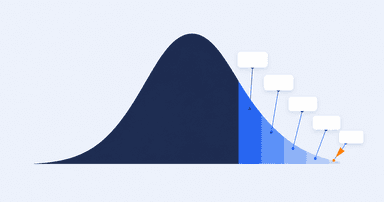
The top 1% in IQ starts at about 135 (1 in 100, deviation score 73.3) on SD 15. Cutoffs for the top 10%, 5%, 2%, and 0.1%, head counts in Japan, Mensa's top 2%, and SD16/SD24.
2026-09-17
Free IQ Test, Paid Result? The Paywall, 3 Checks, and How to Cancel
Most "free" IQ tests charge to see your estimated IQ. How the paywall works, how to spot a small fee that turns into a monthly subscription, how to cancel on iPhone, Android, and the web, and where to get a refund or help (Consumer Hotline 188).
2026-09-17

Do School Phone Bans Raise Grades? What the Research Data Show
Banning phones in English schools raised test scores by about 6% of a standard deviation, with more than double the effect for low achievers. Yet a 2025 UK study found no difference in wellbeing between strict and lenient schools. As bans spread worldwide, we sort out what the research does and does not show.
2026-09-13
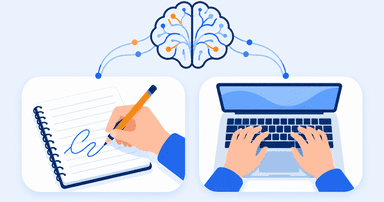
Handwriting vs. Typing: Which Notes Do You Actually Remember?
The famous 2014 finding that handwritten notes beat laptop notes did not replicate in 2021. Meanwhile, EEG studies show broad brain connectivity during handwriting, and children learn letters better by hand. Now that AI summaries are routine, we sort out what is worth writing by hand.
2026-09-13
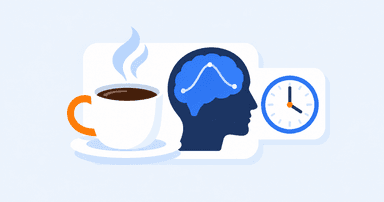
Does Caffeine Make You Smarter? Effects on Focus and Memory, and Their Limits
Caffeine reliably improves attention and reaction time, but its effects on reasoning and problem solving are inconsistent. It peaks 30 to 60 minutes after intake, its half-life is about five hours, and a dose six hours before bed still cuts sleep by over an hour. We lay out how to use it on exam and focus days.
2026-09-13
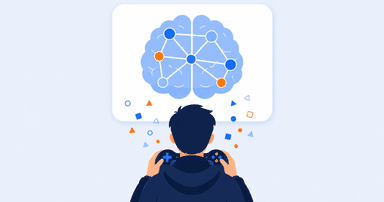
Are Video Games Good or Bad for Your Brain? What the Meta-Analyses Show
Some studies find action games sharpen visuospatial cognition and attention; the same journal then published a rebuttal saying training effects are near zero. Using data on about 2,000 children as well, we sort out what has and has not been shown.
2026-09-08
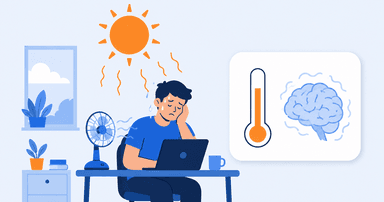
Does Heat Really Slow Your Thinking? What Research Says About Temperature and Cognition
During a heat wave, students in a dorm without air conditioning had reaction times about 13% slower and solved about 13% fewer arithmetic problems. Hot school years also reduce learning. We explain what heat impairs and how to prepare for a test on a hot day, with a diagram.
2026-09-08
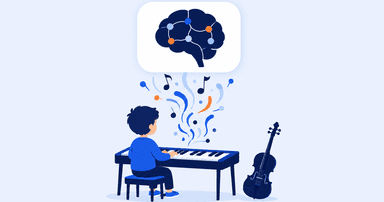
Does Music Make You Smarter? The Mozart Effect and Music Lessons, Tested
Ten minutes of Mozart boosts spatial reasoning; piano lessons raise IQ. We test both famous claims against the original papers and later meta-analyses. The listening effect is explained by arousal and mood, and the lesson effect was near zero across 54 studies and about 7,000 children.
2026-09-08
Does Bilingualism Make You Smarter? Testing the Executive Claim
The idea that using two languages trains executive function is not supported in adults. A meta-analysis pooling 891 effect sizes found the advantage disappears once publication bias is corrected. There are still reasons to learn a language.
2026-08-29

What Is Cognitive Reserve? The Factors Behind a Resilient Brain
The same amount of brain pathology produces wildly different symptoms in different people. Cognitive reserve is the concept that explains the gap. We cover what builds it, alongside the 14 risk factors named by the 2024 Lancet Commission.
2026-08-28
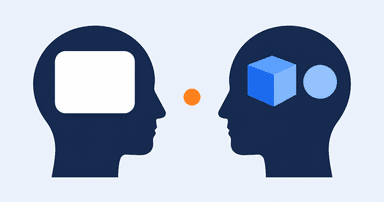
What Is Aphantasia? Prevalence and What It Does to Ability
Aphantasia is the absence of voluntary visual imagery — no picture appears when you close your eyes. Prevalence in the general population is about 1%. It does not mean lower intelligence or weaker spatial reasoning: accuracy holds, the strategy differs.
2026-08-27
What Is an AI's IQ? Why a Score Above 140 Can't Be Compared to a Human's
What the IQ figures reported for AI models actually are: above 140 on public tests, 20 to 40 points lower on unseen ones. We cover what that gap means, training-data contamination, and three reasons IQ does not transfer to AI.
2026-08-26
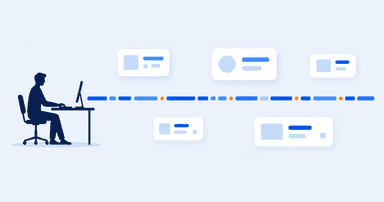
Is the Eight-Second Attention Span Real? Origins vs. Measurements
The claim that humans now focus for less time than a goldfish has no research behind it. Trace it and you reach a 2015 corporate report and an untraceable statistics site. There is a real measured number, though: 47 seconds on screen.
2026-08-26

What Is a Dopamine Detox? Sorting the Effect From the Myth
A dopamine detox does not lower dopamine. We cover what the originator actually proposed in 2019, why the neuroscience framing is wrong, what is genuinely doing the work, and a realistic procedure to use instead.
2026-08-25
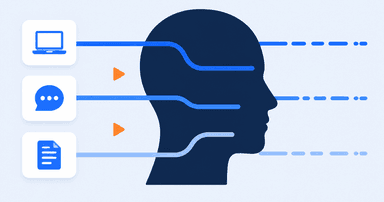
Is Multitasking Really Inefficient? The Real Cost of Switching
You are not processing in parallel — you are switching fast. We cover the classic experiments that measured switching costs, where the widely quoted '40% drop in productivity' actually comes from, the cases where the cost is small, and what works.
2026-08-25
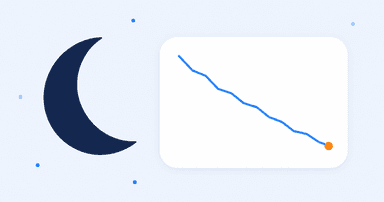
Does Sleep Loss Lower Your IQ? What the Research Actually Shows
Fourteen nights of six-hour sleep push attention down to the equivalent of one to two nights without sleep — and people do not notice. We cover the classic restriction study, what degrades, and what it means for test scores.
2026-08-24

Is Exercise Good for the Brain? Checking the Effect Sizes
What exercise does to cognition, read off the meta-analytic effect sizes: how much improves, how aerobic, resistance, and mind-body training compare, and why 'exercise raises your IQ' overstates the evidence.
2026-08-23
How to Build Critical Thinking — and Where It Stops Working
Critical thinking improves when it is taught explicitly. We cover the effect size of 0.30 from a meta-analysis of 341 effects, the conditions that make instruction work, a four-step procedure, and why knowledge alone does not fire.
2026-08-22
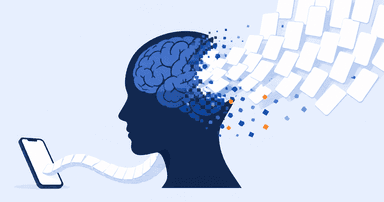
What Is Brain Rot? The Word, the Origin, and What It Does to You
Brain rot was Oxford's Word of the Year 2024. We cover what it means, where it came from, how short-form video relates to attention, and what the research does and does not show.
2026-08-20
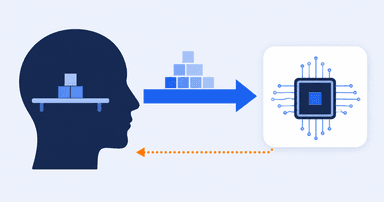
Does Relying on AI Weaken Thinking? The Science of Cognitive Offloading
What research on cognitive offloading says about generative AI and thinking: what the correlational studies actually show, the limits of the MIT EEG study, and how to use AI without losing the learning.
2026-08-19
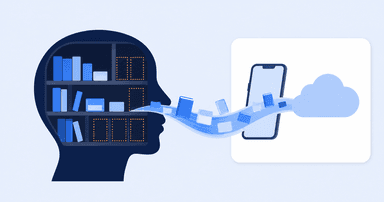
Digital Dementia and the Smartphone Brain: What the Research Found
Digital dementia is not a medical diagnosis, and a 2025 meta-analysis of 411,000 adults pointed the other way. We cover why forgetting feels worse, what memory offloading does, and what actually helps.
2026-08-18
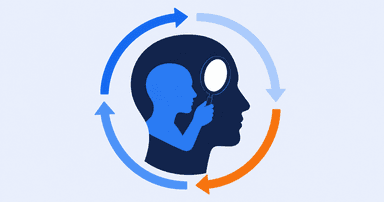
What Is Metacognition? Meaning, Examples, and Three Ways to Train It
Metacognition is treating your own thinking as an object to monitor and adjust. We cover the definition from psychology, everyday examples, and three steps that close the gap between felt and actual understanding.
2026-08-17
What Is Neurodiversity? Meaning, Examples, and Use at Work
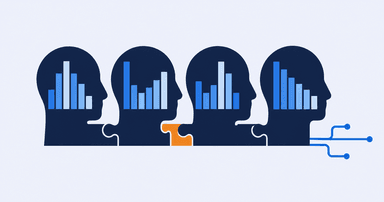
Neurodiversity treats differences in neurological functioning as variation rather than deficit. We cover the origin of the term, Japan's policy push, the link to uneven ability profiles, and workplace practices.
2026-08-16
What Is Cognitive Bias? Common Types and How to Reduce Them
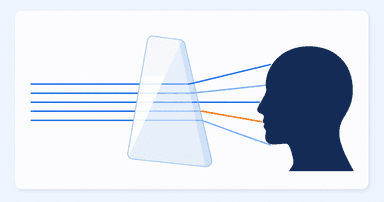
Cognitive bias is systematic distortion in judgment. We trace it from the 1974 classic, list ten common types, explain why knowing them is not enough, and give four procedures that actually reduce them.
2026-08-15
Cognitive Abilities: Types, IQ, and Noncognitive Skills
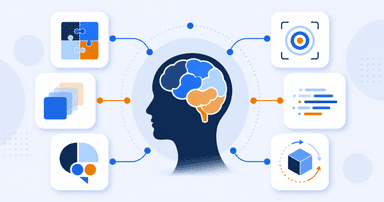
Cognitive abilities cover memory, attention, reasoning, language, and speed. Learn how they differ from IQ and noncognitive skills—and what training can change.
2026-08-10
What Percentage Has an IQ of 160? The Top 0.003%, About 1 in 31,560
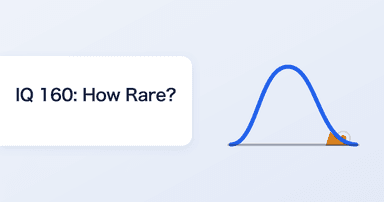
An IQ of 160 sits in roughly the top 0.003% — about 1 in 31,560 people — and corresponds to a deviation score of 90. We compute that rarity from the mean-100, SD-15 normal distribution and cover the gap to IQ 145 and 150, confusion with SD-24 scales, and why measurement error dominates at this level.
2026-08-01
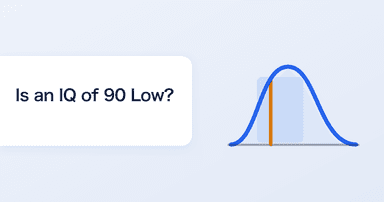
Is an IQ of 90 Low? How to Read a Score Inside the Average Range
An IQ of 90 is not 'the bottom quarter' — it falls inside the average range. We locate it on the normal distribution (deviation score 43.3, about the top 75%), explain what it means day to day, and why the domain profile matters more than the single number.
2026-08-01
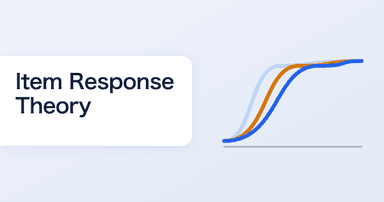
What Is Item Response Theory (IRT)? Why IQ Scoring Isn't a Raw Count
Item response theory (IRT) estimates ability from which questions you got right, not how many. We explain item characteristic curves, difficulty and discrimination, how IRT differs from raw scoring, and why modern IQ tests use it.
2026-08-01
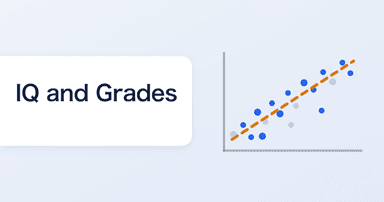
IQ and Academic Performance: What a Correlation of 0.5 Actually Means
The correlation between IQ and academic performance runs around 0.5. That is a real trend with large individual variation — roughly three quarters of the variance in grades is explained by something else. We cover how to read a correlation and which non-cognitive factors matter.
2026-08-01
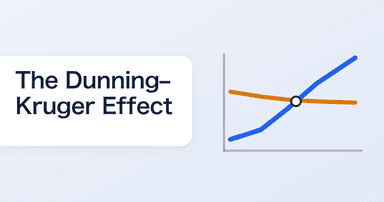
The Dunning–Kruger Effect: Why Self-Assessment Misses, Seen Through IQ
The Dunning–Kruger effect is usually summarized as 'less competent people overrate themselves.' What the data actually show is self-assessment compressed toward the middle, with top performers underrating themselves. We also cover why self-reported IQ is unreliable.
2026-08-01
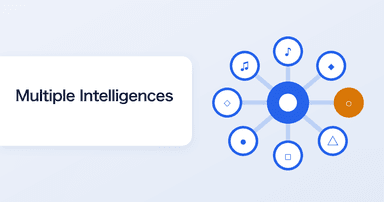
Multiple Intelligences Theory: The Eight Intelligences and How It Conflicts with IQ
Gardner's theory of multiple intelligences splits intelligence into eight independent domains including linguistic, logical-mathematical, and spatial. We cover the eight, where the theory conflicts with g and CHC theory, and its conflation with the learning-styles myth.
2026-08-01
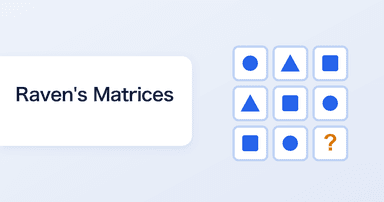
Raven's Progressive Matrices: The Standard Non-Verbal IQ Test Explained
Raven's Progressive Matrices (RPM) is the classic test of fluid reasoning that uses almost no language. We cover the 3×3 figure format, how difficulty is built up, its relationship to g, and the limits of calling it 'culture fair.'
2026-08-01
What Is Processing Speed (Gs)? How to Improve Cognitive Speed, and Its Limits
Processing speed (Gs) is the broad CHC ability covering how quickly and accurately you handle simple work. We cover how IQ tests measure it, what age-related decline really looks like, and which training gains transfer — separated by strength of evidence.
2026-08-01
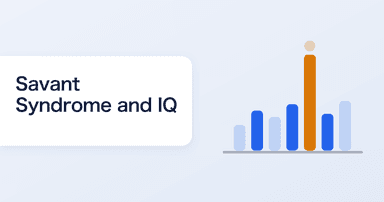
Savant Syndrome and IQ: Where Extraordinary Narrow Ability Comes From
Savant syndrome is the appearance of extraordinary ability in a narrow domain alongside a developmental condition or brain injury. We cover its relationship to composite IQ, why the abilities cluster in memory, calculation, music, and art, and what remains unexplained.
2026-08-01
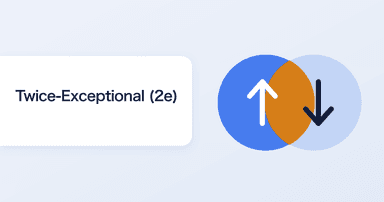
What Is Twice-Exceptional (2e)? High Ability Alongside a Learning Difference
Twice-exceptional (2e) describes people who have both high intellectual ability and a learning disability or developmental condition. We cover why it does not show up in composite IQ, how to read subtest discrepancy, and why 2e is so easily missed.
2026-08-01
What Percentage Has an IQ of 150? Top 0.04%, About 1 in 2,330
An IQ of 150 is roughly the top 0.04%, about 1 in 2,330 people, and equals a deviation score of 83.3. We compute how rare an IQ of 150 is from the mean-100, SD-15 normal distribution, and explain how it differs from IQ 140, IQ 160, and an 'IQ 150' on an SD-24 scale.
2026-07-27
How to Solve Classification Problems: Spot the Odd One Out in 3 Lenses
Classification problems on IQ tests — odd-one-out and grouping items — become solvable once you break figures into attributes. We cover the order to check shape, count, rotation, and fill, how to spot Latin-square patterns, and how to narrow down when you are stuck.
2026-07-27
What Is on the Mensa Test? Question Formats and Difficulty Explained
What kind of questions appear on the Mensa admission test? We explain the non-verbal, figure-based format, the top-2% qualifying threshold, and what preparation actually helps versus what does not — within the limits of what is publicly known.
2026-07-27
IQ and Creativity: The Threshold Hypothesis on Smarts and Ideas
Are high-IQ people more creative? We use the threshold hypothesis as the frame — the two correlate up to a point and decouple above it — and cover divergent thinking and the parts of creativity IQ cannot measure.
2026-07-27
Is an IQ of 100 'Just Average'? What It Really Means and How to Find Your Strengths
An IQ of 100 is by definition exactly average, and about half of everyone scores between 90 and 109. We explain the statistics of being 'average' — and why your domain-level strengths matter more than your overall IQ.
2026-07-21
IQ and Age: When Does Intelligence Peak? Fluid vs. Crystallized Curves
How does IQ change with age? Processing speed (fluid intelligence) peaks in your 20s, while knowledge and vocabulary (crystallized intelligence) keep climbing into your 60s. We walk through the research with age-band data.
2026-07-21
Does Practicing for an IQ Test Help? 5 Last-Minute Ways to Stabilize Your Score
Can practice raise your IQ score? An honest look at the research on practice effects, plus five last-minute tips — format familiarity, sleep, time management — for performing at your true level.
2026-07-20
What Percentage Has an IQ of 110? Top X% and What 'Slightly Above Average' Means
An IQ of 110 is roughly the top 25% — about 1 in 4 people. We explain what 'slightly above average' means in real life, along with the distribution data behind it.
2026-07-20
What Is IQ? Meaning, Origin, and the Basics of the Intelligence Quotient
What is IQ (the intelligence quotient)? A beginner-friendly guide to its meaning and origin, how the mean of 100 works, how it's measured — and whether 'high IQ = smart' is actually true.
2026-07-19
What Is an IQ Test? Types, How They Work, and Choosing a Free Online Test
A guide to the types of IQ tests and how they work, plus four checkpoints for choosing a trustworthy free online IQ test — including an honest look at how they differ from formal assessments.
2026-07-19
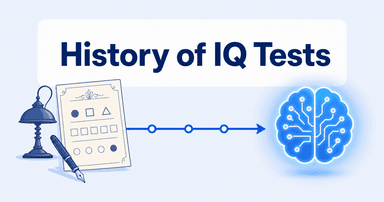
The History of IQ Tests: 120 Years from Binet to Modern CHC Theory
IQ testing began with the 1905 Binet–Simon scale and evolved through ratio IQ, group testing, and Wechsler's deviation IQ to today's CHC theory. We walk through 120 years of history, turning point by turning point.
2026-07-18
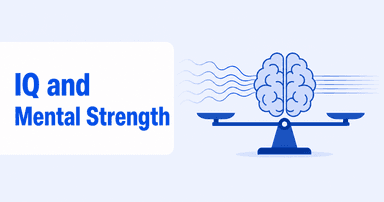
IQ and Mental Strength: Can You Think Your Way to Less Stress?
A high IQ does not mean a strong mind. But psychology has established techniques — cognitive reappraisal, affect labeling — that use cognitive ability to reduce stress. Includes self-care tips by cognitive type.
2026-07-17
10 Brain-Boosting Hobbies — With an Honest Look at the Limits
Ten hobbies said to benefit cognition — chess, music, puzzles, exercise — organized by domain. To the question 'can hobbies raise IQ?', we give an honest answer based on near- and far-transfer research.
2026-07-17
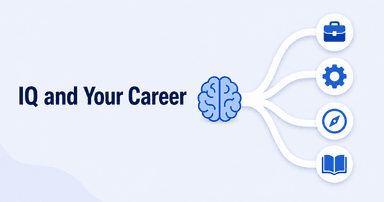
How Does IQ Relate to Your Career? Best Jobs by Cognitive Type
A moderate link between IQ and job performance has been reported repeatedly — but what really helps in choosing a career is knowing which cognitive domain is your strength. We cover recommended careers for each of the four types: spatial, pattern, logic, and classification.
2026-07-16
IQ, Love, and Compatibility: Do Partners Have Similar IQs?
Moderate positive correlations between spouses' IQs have been reported repeatedly (assortative mating). We explain why couples with similar cognitive ability tend to last, with compatibility hints for each cognitive type.
2026-07-16
Is IQ Genetic? What Heritability Really Means, and the Role of Environment
Is IQ determined by genes? We explain how to correctly read the heritability figures from twin studies (50–80% in adults): heritability describes variation in a population, not an individual's fate, and education and environment still matter.
2026-07-15
What Is the Flynn Effect? Why Global IQ Rose — and Recently Stalled
The Flynn effect is the 20th-century phenomenon of average IQ scores rising by about 3 points per decade across countries. We cover the leading explanations — nutrition, education — and the stagnation and reverse Flynn effect reported in developed countries.
2026-07-14
How to Solve Number Sequences: 4 Steps for Spotting the Rule
A 4-step method for the number sequence problems found on IQ tests: how to spot arithmetic, geometric, second-difference, and alternating patterns, with worked examples and tips for solving quickly and accurately.
2026-07-13
Can You Raise Your IQ? An Honest Look at Training and Its Limits
A research-based look at "how to raise your IQ": what improves with practice, the limits of brain-training transfer effects, and the factors that genuinely matter — sleep, exercise, and education — without exaggeration.
2026-07-12
What Percentage Has an IQ of 120? Top 9%, About 1 in 11
An IQ of 120 corresponds to roughly the top 9%, about 1 in 11 people. We explain how it compares with IQ 115 and IQ 130, the deviation-score conversion (about 63), and where it sits in society, with distribution data.
2026-07-11
Are Free IQ Tests Accurate? How They Differ from the Real Thing
Can you trust the results of a free IQ test? We explain how they differ from formal assessments (like the WAIS), the four factors that determine accuracy, and how to spot a trustworthy online test — without exaggeration.
2026-07-10
Fluid vs Crystallized Intelligence: How the Two Differ by Age
A clear look at fluid intelligence (Gf) vs crystallized intelligence (Gc), framed by CHC theory and how each changes with age. The power to solve new problems versus accumulated knowledge, explained without exaggeration.
2026-06-09
How to Build Logical Thinking: Deduction, Induction & Daily Practice
How to develop logical thinking. We cover the difference between deduction and induction, practice with visual logic tasks, and daily habits, without exaggeration.
2026-06-08
How to Train Spatial Reasoning: Boosting Mental Rotation in Daily Life
How to train spatial reasoning (mental rotation). We share practice with shapes and everyday habits, while honestly noting the limit: large gains in overall IQ are unlikely.
2026-06-07
IQ Tests for Children: What Age, and WISC vs. Quick Tests
Basics of children's IQ tests (WISC and more): from what age they can be taken, the difference between testing at a clinic and online quick tests, and the link to gifted education, explained without exaggeration.
2026-06-06
What Percentage Has an IQ of 140? Top ~0.4%, Explained
An IQ of 140 is roughly the top 0.4%, or about 1 in 260 people. We explain its rarity, how it differs from IQ 130, and its honest relationship to giftedness using distribution data.
2026-06-05
EQ vs IQ: What's the Difference, and Which Matters More?
A clear, honest look at the difference between EQ (emotional intelligence) and IQ. IQ reflects cognitive ability such as fluid reasoning, while EQ is about recognizing and regulating emotions—complementary, not ranked.
2026-06-04
Is Average IQ by Country Reliable? The Limits Explained
Are 'average IQ by country' rankings actually correct? We honestly review the sampling and cultural bias problems in Lynn et al.'s research, why you shouldn't take the numbers at face value, and the myths about national rankings.
2026-06-03
How to Convert Between IQ and Deviation Score: Formula and Chart
How to convert between IQ (mean 100, SD 15) and the deviation score (mean 50, SD 10). Covers the conversion formula, a quick chart, and worked examples like IQ 130 equals a deviation score of 70.
2026-06-02
Are Celebrity and Genius IQs Real? Why the Numbers Don't Hold Up
Most "celebrity IQ" and "genius IQ" figures you see online are estimates of unknown origin. Almost no one has officially released their own score, and standards differ by era and test method. Here's an honest explanation of why.
2026-05-31
What Is the WAIS? The Difference Between Formal IQ Tests and Free Online Tests
The WAIS is one of the leading IQ tests for adults. We explain in plain terms how it differs from the WISC and the Binet scales, and why free online tests are estimates rather than clinical diagnoses.
2026-05-28
Is IQ Linked to Income? The Strength of the Correlation and Key Caveats
An honest look at the relationship between IQ and income. Research shows moderate correlations with academic and job performance and earnings, but we lay out, without exaggeration, that correlation is not causation and that many factors are involved.
2026-05-25
What Does "Gifted" Mean? A Clear Look at Its Link to IQ and Its Many Sides
We define what gifted means, explain why an IQ of 130 or above is often used as one benchmark, and cover 2e (twice-exceptional) and the many-sided nature of giftedness, all without exaggeration.
2026-05-22
How to Join Mensa: The Top 2% Requirement and the Testing Process
A clear guide to joining Mensa. We lay out the top 2% requirement (roughly IQ 130 and above), the typical process for accepted prior tests and supervised admission tests, and how to think about the steps involved.
2026-05-19
What Are the Traits of People With High IQ? Research-Backed Tendencies and Caveats
A research-based look at the traits of high-IQ people. We cover tendencies like fast learning and abstract thinking, while honestly explaining why a high IQ does not guarantee success or define personality.
2026-05-16
What Is the g Factor? A Plain-Language Guide to General Intelligence and CHC Theory
What does psychology mean by the "g factor" (general intelligence)? From Spearman's discovery to CHC theory, we lay out the structure of intelligence in clear, accessible terms.
2026-05-12
How to Train Your Working Memory: 5 Everyday Methods
Can working memory really be trained? We cover five everyday methods including chunking and the n-back task, and explain honestly — from the research on near and far transfer — why capacity itself does not grow much.
2026-05-09
What Is Matrix Reasoning? A 3-Step Method, Common Rules, and Worked Examples
Matrix reasoning problems, used in IQ tests and the WAIS, ask you to find the rule in a 3x3 grid of figures. This guide covers the rows-columns-relationship method, the most common rules, worked examples, and time management, with diagrams.
2026-05-06
What Percentage Has an IQ of 130? Top X% and How Rare It Is
An IQ of 130 puts you in roughly the top 2%, about 1 in 50 people. We explain how rare an IQ of 130 is, often cited as the gifted threshold, along with its traits and the underlying distribution data.
2026-05-03
What Is the Average IQ? The Basics of Standard Deviation and Distribution
The average IQ is 100 and the standard deviation is 15. We explain in plain terms why 100 is the average, the shape of the distribution, and how to think about "top X%."
2026-05-01