
What Is Neurodiversity? Meaning, Examples, and Use at Work
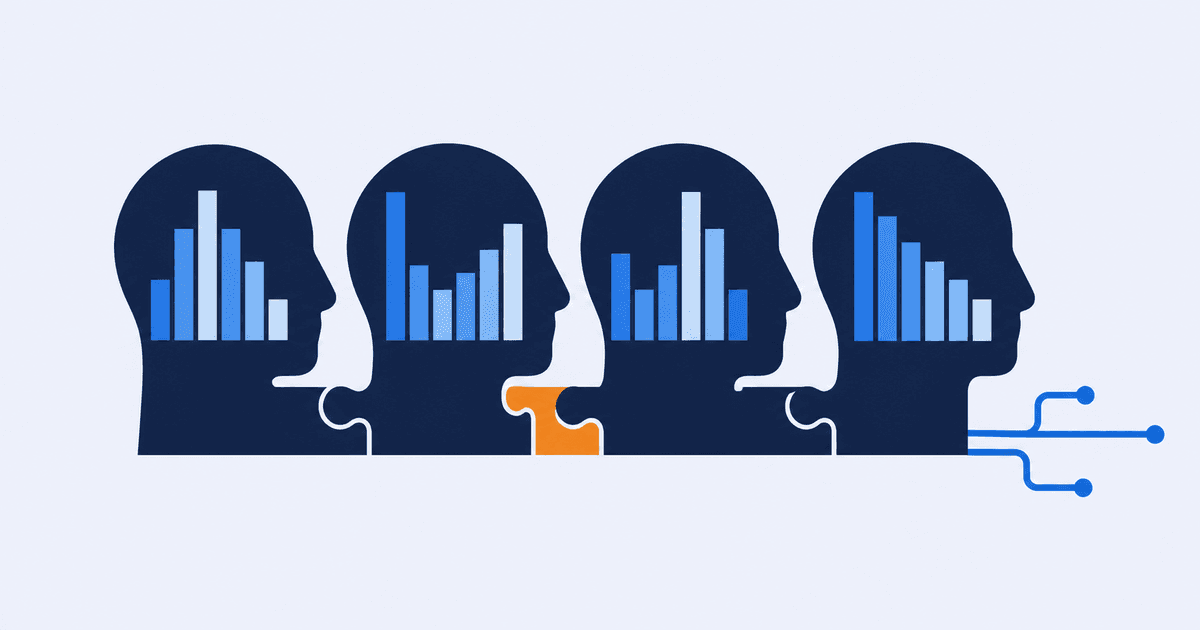
In brief: Neurodiversity is the view that differences in how brains and nervous systems work are variation rather than defect. The sociologist Judy Singer popularized the term in the late 1990s, and in Japan the Ministry of Economy, Trade and Industry promotes it as a talent strategy for digital fields. It aligns with reading a profile of domain strengths rather than one composite score.
Neurodiversity is the view that differences in how brains and nervous systems work are part of human variation rather than defects to be corrected. It now appears mostly in discussions of corporate talent strategy, but it originated from the perspective of the people it describes. This article covers what the term means, where it stands in Japan, and how it relates to cognitive profiles.
Where the word comes from
The term spread in the late 1990s through discussions involving the sociologist Judy Singer, herself on the autism spectrum. At its center is an analogy to biodiversity: variation in neurological functioning has value for a population in its own right.
The practical implication is a shift in what gets evaluated. Instead of asking what a person lacks, you ask whether the combination of their traits and the environment fits. The same trait shows up as difficulty in one setting and as strength in another.
In Japan, METI promotes it
In Japan, the Ministry of Economy, Trade and Industry has made promoting neurodiversity a policy position. The ministry notes that people with developmental traits may show high aptitude in pattern recognition, memory, and mathematical processing, and that these can be applied in digital fields such as data analytics and IT service development, framing it as a growth strategy for companies.
The Japanese push is therefore handled as a question of securing talent and placing it well, not only as welfare accommodation. That points in the same direction as moving from ranking ability on one axis to reading it as a profile.
Reading an uneven profile
The same composite score can break down in entirely different ways. Some people are strong in memory, others in spatial processing, others in speed, and those gaps are often larger than the gaps between composites.
Large differences between domains are not unusual. Even in formal intelligence testing, interpreting the scatter across indices such as verbal comprehension, perceptual reasoning, working memory, and processing speed is the central work (see what the WAIS is). Cases where strong reasoning coexists with a specific difficulty are covered in twice-exceptional (2e), and the test profiles typical of specific conditions in ADHD and IQ and autism and IQ.
Strength and difficulty are frequently two sides of one trait. Intense attention to detail becomes precision in verification and quality control, and becomes a burden when the task is estimating a deadline. Which side surfaces depends on how the work is designed.
Practices that make it work at the office
It goes better when treated as making conditions explicit rather than as accommodation. Each of the following lowers load for everyone, not only for particular individuals.
- Do not leave instructions verbal only; write them down, including premises and completion criteria
- Protect blocks of time with few interruptions and allow notifications to be muted
- Evaluate on deliverables rather than on real-time verbal response
- Leave room to adjust sensory input such as lighting and noise
- Avoid vague instructions and express priority as a number
One caution: neurodiversity is not a claim that particular traits confer talent. Exceptional abilities such as those in savant syndrome are rare cases, and respect for variation should be kept separate from expectations about ability. Whether a diagnosis or support is needed is determined only by qualified professionals.
Look at your own profile
This article is a general explanation, not a diagnosis or medical advice. With that said, it can be a starting point for a rough sense of your own reasoning profile. BrainRank's free IQ test scores 20 questions across spatial reasoning, pattern recognition, logical reasoning, and classification (about 10 minutes) domain by domain, so you can see where the gaps fall alongside the composite estimate. Results are estimates for self-understanding and do not identify traits or conditions.
Frequently asked questions
- What is neurodiversity in simple terms?
- It is the idea that differences in how brains and nervous systems work are part of human variation rather than defects to be fixed. It includes reconsidering developmental traits as a question of fit with the environment.
- Is neurodiversity tied to a diagnosis?
- As a concept it applies to everyone regardless of diagnosis. In practice, the word is often used in the context of employing and accommodating people with traits such as autism or ADHD. Diagnosis itself is made only by qualified professionals.
- Can an IQ test tell me about neurodiversity?
- No. IQ tests are not diagnostic instruments, and a quick online test cannot identify traits. Differences between domain scores can still be useful material for thinking about your own strengths and weaknesses.
Share this article
Related articles
- ADHD and IQ: Is Average IQ Lower? WISC Profiles and High-IQ ADHD
- Autism and IQ: Intellectual Disability Rates and Test Profiles
- Does Reading Raise IQ? What Twin Studies and Meta-Analyses Show
- Does Heat Really Slow Your Thinking? What Research Says About Temperature and Cognition
- How to Train Your Working Memory: 5 Everyday Methods
- Does Music Make You Smarter? The Mozart Effect and Music Lessons, Tested
Editorial note & disclaimer
BrainRank Editorial Team
This article was written and edited by the BrainRank Editorial Team with reference to academic literature on psychometrics, including CHC theory and Item Response Theory (IRT). Statistics and percentages are calculated from a normal distribution model with a mean of 100 and a standard deviation of 15.
The tests on this site provide estimates for entertainment and self-understanding purposes only. They are not medical or clinical assessments, nor official psychological (intelligence) tests.